

The moment a second paycheck disappears — whether through divorce, a partner’s job loss, death, or a major life transition — the financial ground shifts beneath your feet in ways few people are prepared for. Budgeting on a single income when you’ve grown accustomed to two can feel like trying to run a household on half the fuel with all the same expenses. According to the Bureau of Labor Statistics Consumer Expenditure Survey, two-income households spend an average of $84,432 per year. Single-earner households spend just $52,141 — yet their fixed costs rarely drop by the same proportion.
The gap between income and obligation is where the real danger lives. Research from the Federal Reserve’s Report on Economic Well-Being of U.S. Households found that 37% of Americans could not cover an unexpected $400 expense without borrowing or selling something. That number climbs sharply among single-income households. Housing costs alone consume 38-42% of a single earner’s take-home pay in most major metro areas, compared to 22-26% for dual-income couples. The math isn’t just tight — it’s structurally punishing.
This guide gives you a concrete, step-by-step framework for rebuilding your financial life around one income stream. You’ll learn how to audit your spending ruthlessly, restructure your fixed costs, prioritize debt, protect your savings, and — critically — avoid the psychological traps that derail most people in your exact situation. These are not vague tips. Every strategy here includes specific numbers, real benchmarks, and actionable thresholds you can apply this week.
Key Takeaways
- The average two-income household spends $84,432 per year. Dropping to one income rarely cuts that figure by 50% — most households can realistically reduce expenses by only 25-35% in the first 6 months.
- Housing should consume no more than 30% of gross single income. If your mortgage or rent exceeds that threshold, you face a structural deficit — not just a spending problem.
- Building a 3-to-6-month emergency fund is the single highest-priority financial goal for single-income households. Without it, one unexpected expense — average $3,500 for a car repair or medical bill — can trigger a debt spiral.
- Subscription and recurring charges cost the average household $219 per month, per a 2023 C+R Research study. Eliminating even half of unnecessary subscriptions can free $1,314 per year.
- The 50/30/20 budget rule must be modified for single-income households. A more realistic allocation is 60% needs, 20% savings/debt, and 20% wants — at least for the first 12-18 months of transition.
- Single parents in particular face a “childcare cliff”: the average annual cost of full-time childcare in the U.S. reached $15,900 in 2023, consuming up to 31% of a single earner’s median income.
In This Guide
- Understanding the Income Shock
- Auditing Your Expenses With Fresh Eyes
- Restructuring Your Fixed Costs
- Choosing the Right Budgeting Framework for Single Income
- Why the Emergency Fund Comes First
- Managing and Prioritizing Debt on One Paycheck
- Boosting Income Without Burning Out
- The Psychological Traps That Derail Single-Income Budgets
- Tools and Technology to Simplify Single-Income Budgeting
- Long-Term Financial Planning on One Income
Understanding the Income Shock
The transition from dual to single income is rarely gradual. It hits like a wall — and the first 90 days are the most financially dangerous. Most households carry financial structures built on the assumption that two incomes will always be there: the mortgage payment, the two car loans, the private school tuition. These obligations don’t shrink when one income disappears.
The technical term economists use is income shock — a sudden, significant drop in household earnings. Research from the Urban Institute shows that households experiencing income shocks are 3.4 times more likely to fall behind on housing payments within six months than those with stable income. The risk isn’t just financial — it’s compounding and fast-moving.
The Fixed-Cost Trap
Two-income households gradually accumulate fixed costs that feel affordable when split between two paychecks. A $2,400 mortgage is 20% of a $12,000 monthly dual income. It’s 40% of a $6,000 single income. The math doesn’t just get harder — it can become structurally impossible without intervention.
Fixed costs typically make up 65-70% of a dual-income household’s spending. They rarely drop below 55% for a single earner without deliberate restructuring. That 10-15 percentage point gap is where most single-income budgets collapse.
Emotional Spending and the Grief Response
When income drops due to divorce, job loss, or bereavement, emotional spending often spikes. A 2022 study published in the Journal of Consumer Psychology found that individuals experiencing significant life transitions spend 18-23% more on discretionary items in the first three months — often unconsciously. Recognizing this pattern is the first step to countering it.
The Urban Institute found that a single unexpected income shock lasting 6+ months increases the probability of household debt delinquency by 47%. Acting within the first 30 days dramatically improves outcomes.
Auditing Your Expenses With Fresh Eyes
Before you can build a new budget, you need to know exactly where money is going. Most people dramatically underestimate their spending. According to a 2023 NerdWallet survey, Americans underestimate their monthly discretionary spending by an average of $1,100. That gap is the difference between surviving and spiraling.
Pull three months of bank statements and credit card records. Categorize every single transaction — not by what you intended to spend, but by what you actually spent. Use categories like housing, food, transportation, utilities, subscriptions, personal care, entertainment, and debt payments.
The Subscription Audit
Subscriptions are the stealth killers of single-income budgets. C+R Research’s 2023 Subscription Economy study found the average American household has 12 active subscriptions averaging $219 per month — yet most people estimate they spend only $86. The gap is $133 per month, or $1,596 per year in invisible spending.
For a deeper look at these hidden charges, our analysis of the hidden costs killing your budget through subscriptions and fees walks through exactly how to find and eliminate them. A subscription audit alone can recover $50-$150 per month for most households.
The average household wastes $219/month on subscriptions — but estimates it spends only $86/month. That $133 gap costs $1,596 per year in untracked money. Source: C+R Research, 2023.
Variable vs. Fixed Expense Mapping
After categorizing expenses, separate them into two columns: fixed (same amount every month) and variable (fluctuates). This distinction is critical because the strategies for addressing each are entirely different. Fixed costs require structural changes — renegotiation, elimination, or consolidation. Variable costs respond to behavioral changes.
| Expense Type | Examples | Strategy | Potential Savings |
|---|---|---|---|
| Fixed | Mortgage, car payment, insurance | Refinance, downsize, shop rates | $200-$800/month |
| Recurring Variable | Groceries, utilities, gas | Meal plan, reduce usage, carpool | $100-$400/month |
| Discretionary | Dining out, entertainment, clothing | Reduce frequency, set hard limits | $150-$600/month |
| Subscriptions | Streaming, apps, memberships | Audit and cancel unused ones | $50-$150/month |
Restructuring Your Fixed Costs
Fixed costs are where the real money is. Cutting your Netflix subscription saves $15 a month. Refinancing your mortgage or renegotiating your rent can save $300-$600. The single-income budget requires structural surgery — not lifestyle tweaks.
Start with the four largest fixed expenses: housing, transportation, insurance, and debt payments. Together, these typically consume 60-70% of take-home pay. Moving the needle on even two of these four categories can transform your budget’s viability.
Housing: The 30% Rule in Practice
The U.S. Department of Housing and Urban Development defines a household as “cost-burdened” if it spends more than 30% of gross income on housing. For a single earner making $55,000 per year ($4,583/month gross), that means housing costs should not exceed $1,375 per month. In most U.S. metro areas, that’s an extremely tight ceiling.
Options for reducing housing costs include refinancing to a lower rate, renting out a room for $500-$900 per month, negotiating a rent reduction (landlords often prefer a reliable tenant to a vacancy), or temporarily moving to a lower-cost area. None of these are comfortable — but all are more comfortable than foreclosure or eviction.
Transportation: The Second Largest Drain
The average American spends $10,728 per year on transportation, according to the BLS. For a single-income household, this is often 18-24% of take-home pay. If you have two car payments, eliminating one is the highest-leverage transportation decision you can make. Selling a second vehicle can save $300-$600 per month in combined loan payments and insurance.
Do not rush to refinance a car loan without calculating total cost. Extending a 36-month loan to 60 months reduces your monthly payment by ~$120 but can cost you $1,800-$2,400 more in total interest. Always calculate total cost, not just monthly payment.
Insurance: The Most Negotiable Fixed Cost
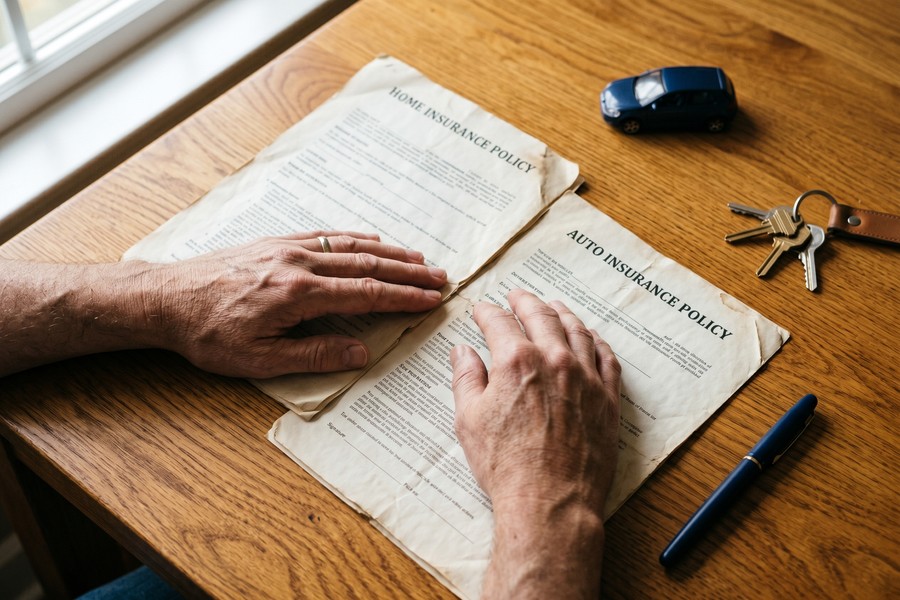
Most people treat insurance premiums as immovable. They aren’t. Bundling home and auto insurance with one carrier saves an average of $573 per year, according to the Insurance Information Institute. Raising your deductible from $500 to $1,000 on auto insurance reduces your premium by 15-30%. Shopping competing quotes annually takes 45 minutes and commonly saves $200-$400 per year.
| Fixed Cost | Dual-Income Average | Single-Income Target | Best Reduction Strategy |
|---|---|---|---|
| Housing | $1,800/month | Max 30% of gross income | Refinance, rent a room, relocate |
| Transportation | $894/month | Under $500/month | Sell second car, use public transit |
| Insurance (all) | $520/month | Under $350/month | Bundle, raise deductibles, shop rates |
| Debt Payments | $620/month | Under 20% of net income | Consolidate, avalanche method |
Choosing the Right Budgeting Framework for Single Income
Budgeting on a single income requires a different framework than the standard personal finance advice written for dual earners. The popular 50/30/20 rule — 50% needs, 30% wants, 20% savings — was designed with middle-class dual-income households in mind. On one income, that model often fails from day one.
A more realistic starting framework for the first 12-18 months on one income is the 60/20/20 rule: 60% to essential needs, 20% to savings and debt repayment, and 20% to discretionary spending. Once your financial footing stabilizes, you can shift toward a more aggressive savings rate.
Zero-Based Budgeting for Single Earners
Zero-based budgeting assigns every dollar of income a specific job — expenses, savings, or debt — until the balance reaches zero. This method works extremely well for single-income households because it forces total awareness of every spending decision. There’s no “float” to absorb mistakes. If you want to explore how this compares to other philosophies, read our comparison of values-based budgeting versus zero-based budgeting for a deeper look at which system changes behavior most effectively.
The zero-based method also forces you to make deliberate trade-offs. If groceries went $80 over budget, you must pull that $80 from another category — entertainment, clothing, or dining. This accountability loop is what makes it so effective under income constraints.
The Envelope Method for Variable Spending
For variable spending categories — groceries, gas, dining, personal care — the envelope method provides a physical or digital spending limit that’s hard to ignore. You allocate a set dollar amount per category per month. When the envelope is empty, spending in that category stops. This binary feedback mechanism prevents the most common single-income budget failure: category creep.
Use a digital envelope method through apps like YNAB or Goodbudget. Set your grocery envelope at 10-12% of take-home pay. For a $4,000 net monthly income, that means $400-$480 for groceries — roughly $100-$120 per week for a single adult, or $130-$160 for a household with children.
Why the Emergency Fund Comes First
On a dual income, one partner’s emergency fund can backstop the other. On a single income, there is no backstop. A $3,000 emergency — a car repair, an ER visit, a broken appliance — can become a $3,000 credit card balance accruing 24% APR interest, costing you an additional $720 per year just in interest charges.
Financial planners universally recommend a 3-to-6-month emergency fund for single-income households. If your monthly essential expenses are $3,500, your target emergency fund range is $10,500 to $21,000. That’s a significant goal — but even $1,000 saved before any other financial move reduces the probability of debt spiral by a meaningful margin.
Where to Keep Your Emergency Fund
Your emergency fund should be liquid, accessible, and separate from your checking account. A high-yield savings account (HYSA) is the standard vehicle. As of late 2024, leading HYSAs were offering 4.5-5.0% APY — meaning a $10,000 emergency fund earns $450-$500 per year in interest. That’s meaningfully better than the national average savings account rate of 0.46% APY.
Keep your emergency fund at a different bank than your primary checking account. The friction of a 1-2 business day transfer prevents impulse withdrawals. This structural separation has been shown to increase emergency fund retention rates significantly.
“The emergency fund is not optional for single-income households — it’s load-bearing. Without it, every unexpected expense becomes a debt event, and those events compound until the budget collapses entirely.”
Building the Fund While Paying Bills
Start with a micro-goal: $500 in 60 days. Automate a transfer of $8.34 per day, or $250 per paycheck on a biweekly schedule. Once you hit $500, increase the transfer by $25-$50 per paycheck. The psychological momentum of reaching small milestones accelerates savings behavior. Research from the University of Chicago’s behavioral economics group confirms that milestone framing increases savings consistency by 31%.
Managing and Prioritizing Debt on One Paycheck
Debt is the most dangerous fixed cost for single-income households because it compounds. A $10,000 credit card balance at 24% APR costs $2,400 per year in interest — money that does nothing but reduce your budget further. Eliminating high-interest debt is one of the highest-return financial moves available to single earners.
There are two primary debt elimination strategies: the avalanche method (pay off highest-interest debt first to minimize total interest paid) and the snowball method (pay off smallest balances first for psychological momentum). For single-income households, the avalanche method saves significantly more money. A $20,000 debt load with mixed interest rates can be eliminated 8-14 months faster and $1,500-$3,000 cheaper using the avalanche approach.
When to Consolidate
Debt consolidation makes sense when you can lower your average interest rate by at least 4-5 percentage points. If you’re paying 22-26% on multiple credit cards, a personal consolidation loan at 14-16% APR can save $800-$1,200 per year on a $10,000 balance. Balance transfer cards with 0% introductory APR periods (typically 12-21 months) are another powerful tool — but only if you can pay off the balance before the promotional period ends.
The Federal Reserve reported that average credit card interest rates reached 22.77% in late 2024 — the highest level in 40 years of data collection. For single-income households carrying balances, this makes debt elimination a mathematically urgent priority above almost every other financial goal except basic emergency savings.
Negotiating With Creditors
Many borrowers don’t realize that credit card companies will negotiate. If you’ve experienced a documented income change — job loss, divorce, death of a spouse — call your creditors directly and request a hardship program. These programs typically offer 6-12 months of reduced interest rates (sometimes 0%), waived late fees, and restructured payment schedules. You must ask. These programs are not advertised.
| Debt Type | Average APR | Priority Level | Best Strategy |
|---|---|---|---|
| Credit Cards | 22-27% | Highest | Avalanche or 0% balance transfer |
| Personal Loans | 11-18% | High | Avalanche method |
| Auto Loans | 7-12% | Medium | Maintain payments, explore refinance |
| Student Loans | 5-8% | Lower | Income-driven repayment, PSLF if eligible |
| Mortgage | 6-7.5% | Lowest priority to accelerate | Maintain, refinance if rate drops 1%+ |
Boosting Income Without Burning Out
Cutting expenses has a floor — there’s only so much you can cut before quality of life deteriorates to an unsustainable level. Income, in theory, has no ceiling. Budgeting on a single income becomes dramatically easier when that single income grows — even modestly. A $500 per month increase in net income has the same budget effect as cutting $500 in expenses, with no reduction in lifestyle.
The most effective income-boosting strategies for single earners fall into three categories: increasing earnings at your primary job, creating a side income stream, and monetizing assets you already own.
Negotiating a Raise
The median raise from job negotiation is 5.4%, according to data from Salary.com. On a $60,000 salary, that’s $3,240 per year — or $270 per month. Research by Carnegie Mellon economist Linda Babcock found that people who negotiate salary offers receive an average of $5,000 more per year than those who accept the first offer. Most people don’t ask. The financial cost of not asking is enormous over a career.
Side Income: Realistic Expectations
Side income is real, but it takes time to build. Realistic side income ranges for common activities: freelance writing ($500-$2,000/month), rideshare driving ($400-$1,200/month depending on hours), tutoring ($800-$2,000/month), and selling handmade products online ($200-$800/month to start). Don’t plan your budget around side income until you have three consecutive months of consistent earnings. Plan around what you have; treat extra income as a budget bonus.
According to Bankrate’s 2023 Side Jobs Survey, 39% of Americans have a side hustle. Among those earning side income, the median monthly amount is $810 — enough to meaningfully stabilize a single-income household budget or accelerate debt payoff by 12-18 months.
Monetizing Existing Assets
Single earners often overlook the income potential in assets they already own. Renting a spare bedroom on Airbnb generates an average of $924 per month nationally, per AirDNA data. Renting your car through Turo when you’re not using it can earn $400-$700 per month. Selling items you no longer need — furniture, electronics, tools — can generate a one-time $500-$3,000 infusion to jumpstart your emergency fund.
The Psychological Traps That Derail Single-Income Budgets
Money is emotional. That’s especially true when your financial reality has changed dramatically and recently. The single biggest predictor of budget failure isn’t math — it’s psychology. Understanding the mental patterns that drive overspending under stress is essential for long-term success.
Research from the American Psychological Association consistently shows that financial stress is the top stressor for American adults. Single-income earners, particularly those transitioning from a dual-income life, carry a unique compound stress load: grief or adjustment to a major life change, plus financial anxiety, plus the cognitive burden of managing everything alone.
Lifestyle Creep in Reverse — And Why It’s Hard
Lifestyle creep describes the tendency to expand spending as income rises. Its reverse — forced lifestyle compression — triggers genuine psychological resistance. Research shows people feel losses twice as intensely as equivalent gains (a concept known as loss aversion, documented by Kahneman and Tversky). Cutting your restaurant budget from $400 to $100 per month feels twice as painful as it would feel good to gain $300. Understanding this doesn’t eliminate the pain, but it contextualizes it.
Our detailed guide on the real cost of lifestyle creep and how to stop it from killing your budget covers this phenomenon in depth and offers strategies for managing the compression without feeling deprived.
“When people go from two incomes to one, they rarely adjust their spending identity. They still see themselves as a two-income household and spend accordingly — until the overdraft notices become impossible to ignore. The budget has to come before the behavior change, not after.”
Avoidance and Denial
Financial avoidance — refusing to look at account balances, ignoring bills, not opening statements — is one of the most common responses to income shock. A 2021 Bankrate survey found that 44% of Americans avoid checking their bank balance when they know money is tight. This avoidance creates a feedback loop: the less you look, the worse it gets, and the less you want to look.
The antidote is scheduled financial check-ins. Set a recurring 20-minute appointment every Sunday evening to review the week’s spending versus budget. This ritualized approach reduces avoidance by converting a dreaded event into a predictable routine.
Tools and Technology to Simplify Single-Income Budgeting
The right tools reduce the cognitive load of managing a tight budget — and that matters enormously when you’re already stretched thin. Manual budgeting via spreadsheets works, but modern budgeting apps automate the tracking and categorization that would otherwise consume an hour or more per week.
The two most effective categories of tools for single-income budgeters are comprehensive budgeting apps (which track, categorize, and project spending) and automated savings tools (which remove the friction from saving by doing it without requiring a decision each time).
Choosing Between an App and a Spreadsheet
Budgeting apps offer real-time transaction syncing, automatic categorization, and visual dashboards that make it immediately clear where you stand. Spreadsheets offer total control and no subscription cost. Our head-to-head comparison of budgeting apps versus spreadsheets examines which method actually produces better results based on your specific financial situation and personality type.
Automation as a Safety Net
Automating your savings and bill payments removes the decision-making that leads to procrastination and missed contributions. Set your emergency fund transfer to execute the day after your paycheck deposits. Automate minimum debt payments so you’re never charged a late fee ($25-$40 per incident, plus the potential credit score damage). Automation doesn’t require discipline — it replaces the need for it.
Vanguard research found that households using automated savings contributions accumulate 34% more savings over a 10-year period than those making manual contributions — even when the dollar amounts are identical. Automation removes the decision fatigue that causes people to skip contributions during stressful months.

Long-Term Financial Planning on One Income
Once the immediate budget crisis is stabilized — emergency fund started, expenses restructured, debt managed — the focus must shift to long-term financial resilience. Budgeting on a single income isn’t just about surviving this month. It’s about building a financial structure that works indefinitely without a second paycheck to rely on.
Single-income households face unique long-term risks: less retirement savings capacity, greater vulnerability to disability, and no financial partner to absorb economic shocks. These risks are real and require deliberate mitigation strategies.
Retirement Savings on One Income
The standard advice to save 15% of gross income for retirement is often unrealistic in the early stages of single-income life. A practical approach: contribute at minimum the amount needed to capture your employer’s full 401(k) match — this is a 50-100% guaranteed return on those dollars. Even if you can only afford $50 per month beyond the match, invest it. Time in market beats amount invested when you start early. Our analysis of Roth IRA versus Traditional IRA tax implications can help you choose the right account structure for your situation.
Disability and Life Insurance
Disability insurance is the most underappreciated protection tool for single earners. The Social Security Administration reports that one in four 20-year-olds will experience a disability before retirement. For a single-income household, disability without insurance coverage can be catastrophic. A short-term disability policy typically costs $25-$50 per month and replaces 60-70% of income for up to 12 months. Long-term disability coverage (replacing income for years or until retirement) costs $100-$200 per month for a $60,000/year earner. This is non-negotiable protection.
“Single-income households carry 100% of income risk in one person. That concentration risk demands proportionally higher insurance coverage, a larger emergency fund, and a faster timeline for building financial independence. The margin for error is thin — planning has to compensate for that.”
Planning for Children’s Education Costs
For single parents, college savings often feels impossible when daily expenses are already maxed. But small, consistent contributions compound powerfully. Contributing $100 per month to a 529 plan from the time a child is born results in approximately $30,700 by age 18 (assuming 6% average annual growth). That’s not a full ride — but it’s a meaningful contribution that prevents the alternative: the child taking on all college debt, or not attending at all.
Real-World Example: Sarah’s Transition From Dual Income to Single
Sarah, a 38-year-old marketing manager in Columbus, Ohio, earned $72,000 per year. Her husband’s $65,000 income made their combined household income $137,000. When they divorced in early 2023, Sarah retained primary custody of their two children (ages 8 and 11) and the family home — a $1,900/month mortgage on a house worth $310,000. Her take-home pay after taxes and health insurance was $4,650 per month. Her existing monthly expenses totaled $5,820. She was immediately $1,170 short every month.
Sarah’s first move was a full expense audit. She identified $384 per month in unused or duplicated subscriptions (including four streaming services, a gym she hadn’t used in seven months, and two premium app subscriptions). She called her auto insurer and bundled with her home insurance, saving $61 per month. She refinanced her remaining car loan from 8.9% to 6.1% APR, reducing her payment from $430 to $374 per month. She also took on one freelance marketing client at $800 per month. In 60 days, she had closed her monthly deficit and identified $273 in additional monthly surplus.
Over the following 12 months, Sarah built a $6,800 emergency fund, paid off a $4,200 credit card balance using the avalanche method (saving approximately $1,008 in interest compared to minimum payments), and began contributing 4% of her salary to her 401(k) — just enough to capture her employer’s full 3% match. She also rented her spare bedroom to a graduate student for $750 per month starting in month seven, which she directed entirely to an emergency fund top-up and then to her children’s 529 accounts ($200/month each).
By month 18, Sarah’s monthly cash flow was positive by $620, her emergency fund had reached $9,400 (about 2.5 months of expenses), and her net worth — despite the divorce — had actually increased by $14,300 from its lowest point during the transition. The key factors in her success: immediate structural changes to fixed costs, a documented budget she reviewed weekly, and a small but consistent side income that grew over time as her client base expanded.
Your Action Plan
-
Complete a full 3-month expense audit within 7 days
Pull bank and credit card statements from the past three months. Categorize every transaction into fixed, variable, and discretionary buckets. Calculate your actual monthly average in each category — not what you think you spend, but what you spent. This baseline is the foundation of every decision that follows.
-
Identify and eliminate at least $100/month in subscriptions within 14 days
Go through your bank and credit card statements line by line and flag every recurring charge. Cancel any subscription you haven’t actively used in the past 30 days. For services you use occasionally, downgrade to a lower tier. The goal is $100 minimum recovered — most people find $150-$250 once they actually look.
-
Restructure your top two fixed costs within 30 days
Contact your auto insurer to bundle and shop competing quotes. Call your internet and cell phone providers to negotiate lower rates (ask for the retention department — they have authority to discount). If your housing costs exceed 30% of gross income, begin researching whether refinancing, adding a tenant, or downsizing is viable within 6-12 months.
-
Open a high-yield savings account and automate your emergency fund within 21 days
Choose a HYSA offering at least 4% APY at a bank separate from your primary checking account. Set an automatic transfer for the day after each paycheck deposits. Start with whatever you can afford — even $25 per paycheck. Increase the amount by $10-$25 each month as you identify additional savings from your expense audit.
-
Choose and implement a budgeting framework within 30 days
Select either the zero-based budgeting or 60/20/20 framework and assign every dollar of your take-home pay to a category. Use a budgeting app or spreadsheet to track spending in real time. Schedule a weekly 20-minute review every Sunday evening to assess where you stand versus budget and adjust as needed.
-
Create a debt payoff plan using the avalanche method within 45 days
List all debts by interest rate, highest to lowest. Calculate the minimum payments on all debts and add them to your budget. Direct any remaining discretionary dollars toward the highest-rate debt first. If your interest rates exceed 20%, call creditors immediately to request a hardship rate reduction before making any extra payments.
-
Evaluate one income-boosting opportunity within 60 days
Research whether negotiating a raise, taking on one freelance client, renting a room, or monetizing an existing asset is feasible for your situation. You don’t need to pursue all of these — commit to one. Even $300-$500 per month in additional income transforms your budget math and dramatically accelerates your timeline to financial stability.
-
Review and purchase disability insurance within 90 days
Check whether your employer offers group disability insurance (typically cheaper than individual policies). If not, or if coverage is insufficient, obtain quotes for a short-term and long-term individual policy. Budget $50-$200 per month for this coverage — it is the most important financial protection available to a single-income earner and the most commonly neglected.
Frequently Asked Questions
How long does it realistically take to stabilize a budget after dropping from two incomes to one?
Most financial advisors cite 6-12 months as the typical stabilization window. The first 90 days involve the most significant structural changes — auditing, cutting, and restructuring. Months 3-6 focus on building the emergency fund and establishing consistent habits. Full stabilization, meaning positive monthly cash flow plus a funded emergency reserve, typically occurs between months 9 and 18 depending on the starting deficit and income level.
Should I prioritize paying off debt or building an emergency fund first?
Build a $1,000 starter emergency fund first — no matter what. Even with high-interest debt, having zero emergency savings means every unexpected expense becomes new debt. Once you have $1,000 in reserve, shift the majority of extra dollars toward high-interest debt elimination, while continuing to add a small amount ($25-$50 per paycheck) to the emergency fund. Once high-interest debt is eliminated, return to building the emergency fund to its full 3-to-6-month target.
What if my income simply doesn’t cover my essential expenses?
This is a structural deficit — not a spending behavior problem — and it requires structural solutions. Options include: renting a room in your home for $500-$900 per month, applying for income-based assistance programs (SNAP, LIHEAP, Medicaid), pursuing a second part-time job, or making a major housing change such as downsizing or relocating to a lower-cost area. If you are a renter, contact your landlord immediately and negotiate. Most prefer a reduced-rent agreement to a vacancy. If you are a homeowner, contact your mortgage servicer to explore forbearance or modification options.
Is the 50/30/20 budget rule usable on a single income?
For most single earners — particularly those in higher cost-of-living areas — the 50/30/20 rule is too optimistic in the early transition period. A 60/20/20 split (60% needs, 20% savings/debt, 20% wants) is a more realistic starting point. Over time, as you reduce debt and fixed costs, you can shift toward 50/25/25 or even the original 50/30/20. The framework should serve your reality — not the other way around.
How do I handle childcare costs as a single earner?
Childcare is the most significant financial pressure unique to single parents. Start by researching subsidy eligibility — the Child Care and Development Fund (CCDF) provides federal childcare subsidies to low-to-moderate-income families. Visit childcare.gov to find your state’s subsidy programs. Additionally, explore care-sharing arrangements with other parents, employer-sponsored childcare FSAs (which allow you to pay up to $5,000 in childcare costs pre-tax), and Head Start programs for eligible children aged 0-5.
What is the biggest budgeting mistake single-income earners make?
The single most common and costly mistake is failing to restructure fixed costs in the first 30-60 days. Most people focus on cutting discretionary spending — coffee, dining, entertainment — while leaving housing, transportation, and insurance costs completely unchanged. The math almost never works out. Discretionary cuts save $100-$300 per month. Fixed cost restructuring can save $300-$1,000 per month. Do both — but start with the bigger levers first.
How do I stay motivated when budgeting feels like constant sacrifice?
Reframe your budget as a financial values document — a written statement of what matters to you — rather than a list of restrictions. Deliberately keep one or two small pleasures in your budget that bring genuine enjoyment. Research on willpower and self-control (notably from Roy Baumeister’s work at Florida State University) shows that complete deprivation increases the probability of a budget “binge” that does more damage than the modest ongoing expense would have. Sustainable budgets have intentional release valves built in.
Should I pause retirement contributions while I’m getting financially stable?
Pause retirement contributions above your employer match only as a last resort. Always contribute enough to capture any employer match — this is free money you cannot reclaim if you miss it. Beyond the match, it is acceptable to temporarily reduce contributions during a financial crisis, but set a specific trigger (e.g., “I will increase contributions to 8% once my emergency fund reaches $5,000”). Missing years of compound growth has a permanent cost that is hard to recover from later in life.
How does budgeting on one income differ for someone who was previously widowed versus divorced?
The financial mechanics are similar, but the resource landscape differs. Widowed individuals may receive life insurance benefits, Social Security survivor benefits (particularly important for those with children or who were married 10+ years), and inheritance — all of which can significantly alter the starting financial position. Divorced individuals face legal costs averaging $7,000-$15,000, potential alimony or child support obligations, and asset division that may leave either party in a significantly different financial position than expected. Both situations benefit from a consultation with a certified financial planner (CFP) within the first 90 days to navigate the specific transition.
Are there government programs specifically designed to help single-income households?
Yes, several. SNAP (Supplemental Nutrition Assistance Program) provides food assistance to eligible low-to-moderate income households. LIHEAP (Low Income Home Energy Assistance Program) helps with utility costs. Medicaid and CHIP provide healthcare coverage for eligible low-income adults and children. The Earned Income Tax Credit (EITC) can provide a refundable tax credit of up to $7,430 for a single parent with three or more qualifying children. Visit Benefits.gov to screen for all programs you may qualify for based on your household income and size.
Sources
- U.S. Bureau of Labor Statistics — Consumer Expenditure Survey
- Federal Reserve — Report on the Economic Well-Being of U.S. Households
- Urban Institute — Financial Vulnerability and Household Hardship Research
- U.S. Department of Housing and Urban Development — Affordable Housing Resources
- Social Security Administration — Disability Statistics and Research
- Childcare.gov — Federal Childcare Assistance Programs
- Benefits.gov — Federal Benefits Eligibility Screener
- Internal Revenue Service — Earned Income Tax Credit (EITC) Information
- Bankrate — Average Savings Account Interest Rate Data
- Bankrate — Side Jobs Survey 2023
- Insurance Information Institute — Homeowners and Auto Insurance Statistics
- Federal Reserve — Consumer Credit Report (Credit Card Rate Data)
- Salary.com — Salary Negotiation Data and Research
- Vanguard — Research on Automated Savings Behavior
- Consumer Financial Protection Bureau — Debt Management and Creditor Negotiation Resources