

Quick Answer
Budgeting for college students starts with tracking every dollar, choosing a simple system like the 50/30/20 rule, and using a free app to automate the process. In July 2025, the average college student spends $2,000–$3,000 per month on living expenses. You can build a working budget in under 30 minutes by listing income, categorizing expenses, and setting spending limits for each category.
Budgeting for college students can feel overwhelming when you have never managed money on your own before — but it does not have to be complicated. A 2023 Sallie Mae report found that 70% of college students say they wish they had received more financial education before starting school. The good news is that a basic, working budget takes less than an hour to set up, and the habits you build now will pay dividends for decades.
Financial stress is a growing crisis on campuses. According to TIAA Institute research, nearly 60% of college students report that financial stress negatively affects their academic performance. With tuition rising, student loan balances growing, and the cost of living at a multi-decade high, learning to budget in July 2025 is more urgent than ever.
This guide is written specifically for first-time budgeters in college — students who may have a part-time job, financial aid, or parental support and zero experience managing it all. By the end, you will know exactly how to track spending, build an emergency fund, avoid debt traps, and use free tools to stay on track every month.
Key Takeaways
- The average college student spends $2,000–$3,000 per month on living expenses according to Education Data Initiative — knowing your number is the first step to controlling it.
- 70% of students who use a written or digital budget report feeling more in control of their finances, per Sallie Mae’s How America Pays for College study.
- The 50/30/20 rule — allocating 50% to needs, 30% to wants, and 20% to savings — is widely recommended by financial educators as the simplest starting framework for new budgeters.
- Students who track spending daily are 3x more likely to avoid overdraft fees, which average $35 per incident at major banks, according to the Consumer Financial Protection Bureau.
- Building even a $500 emergency fund before your first semester can prevent the majority of budget-breaking crises, according to guidance from the Federal Reserve’s Report on the Economic Well-Being of U.S. Households.
- Students who use a budgeting app spend an average of $200 less per month than those who do not track spending at all, per data cited by NerdWallet’s budgeting app analysis.
In This Guide
- Step 1: How Do I Figure Out How Much Money I Actually Have Each Month?
- Step 2: How Do I Track Where My Money Is Going as a College Student?
- Step 3: Which Budgeting Method Is Best for College Students With No Experience?
- Step 4: How Do I Cut Expenses in College Without Feeling Broke All the Time?
- Step 5: How Do I Start an Emergency Fund on a College Student Budget?
- Step 6: How Do I Avoid Credit Card Debt and Overdraft Fees as a Student?
- Frequently Asked Questions
Step 1: How Do I Figure Out How Much Money I Actually Have Each Month?
Start by listing every source of money that hits your account each month — this is your monthly income baseline, and no budget works without it. College students often have irregular or mixed income streams, which makes this step more important, not less.
How to Do This
Write down every income source you receive in a typical month. Common sources for college students include part-time job wages, parental allowances, financial aid disbursements, scholarships, and freelance income.
If your income varies month to month — for example, if you work more hours in the summer — use your lowest recent month as your baseline. This conservative approach prevents overspending in leaner months. Apps like Mint or YNAB (You Need a Budget) can automatically pull in bank transactions to help you see your real averages over time.
For financial aid, divide your total semester disbursement by the number of months in the semester. A common mistake is treating a $4,000 disbursement as monthly spending money when it needs to last four or five months.
What to Watch Out For
Do not count financial aid refund checks as “extra money.” These funds are intended to cover living expenses for the entire semester. Spending a large disbursement quickly is one of the most common budgeting errors first-year students make.
Also, separate pre-tax income from take-home pay if you have a job. Your paycheck after taxes and deductions is the only number that matters for your budget.
Open a free checking account with no monthly fees specifically for college expenses. Banks like Chime and Ally offer student-friendly accounts with zero minimum balances and no overdraft fees, making it easier to see your real cash position at a glance.
Step 2: How Do I Track Where My Money Is Going as a College Student?
Tracking your spending is the single most important habit in budgeting for college students — you cannot manage money you cannot see. Most first-time budgeters are surprised to discover where their money actually goes versus where they think it goes.
How to Do This
For the first two weeks, record every single purchase — coffee, vending machines, streaming services, everything. You can use a free app, a spreadsheet, or even a notes app on your phone. The goal is to build an honest picture of your spending patterns before you start making rules.
If you prefer a digital tool, Copilot, Monarch Money, and YNAB all offer automatic transaction categorization by connecting to your bank account. If you are not comfortable linking bank accounts, the comparison between a budgeting app vs. spreadsheet can help you decide which tracking method fits your style and privacy preferences.
Group your spending into four simple categories to start: housing, food, transportation, and everything else. This gives you a usable picture without becoming overwhelming.
What to Watch Out For
Hidden recurring charges are a silent budget killer for students. Subscription services — free trials that auto-renewed, streaming platforms shared with high school friends, gym memberships — can quietly drain $50–$150 per month. For a full breakdown of how these charges add up, see this detailed guide on hidden costs that kill your budget.
The average American pays for 4.5 subscription services they rarely or never use, collectively wasting over $32 per month, according to a 2023 survey by C+R Research. For a college student, that is money that could cover two weeks of groceries.

Step 3: Which Budgeting Method Is Best for College Students With No Experience?
The best budgeting method for college students with no experience is the 50/30/20 rule — it is simple enough to implement immediately and flexible enough to handle the irregular income patterns common in college. More complex systems like zero-based budgeting can come later once the habit is established.
How to Do This
Divide your monthly take-home income into three buckets: 50% for needs (rent, groceries, utilities, transportation), 30% for wants (dining out, entertainment, clothing), and 20% for savings and debt repayment. On a $1,500 monthly income, that works out to $750 for needs, $450 for wants, and $300 for savings.
If 50% does not cover your rent and food, adjust the ratios — 60/20/20 or even 70/15/15 is acceptable when you are starting out. The structure matters more than the exact percentages. Financial educator Ramit Sethi, author of I Will Teach You to Be Rich, recommends automating as much as possible so the decision is made before you can spend impulsively.
Alternative systems worth considering include the envelope method, where you allocate physical or digital cash to spending categories and stop when each envelope is empty, and zero-based budgeting, where every dollar of income is assigned a job. If you want a deeper comparison of these approaches, read this breakdown of zero-based budgeting vs. the envelope method to see which philosophy fits your personality.
What to Watch Out For
Do not choose a system so complex that you abandon it in week two. Consistency beats perfection. A simple system you actually use every month will outperform an elaborate one you quit after 10 days.
| Budgeting Method | Best For | Time Required Per Week | Savings Potential |
|---|---|---|---|
| 50/30/20 Rule | Complete beginners with steady income | 15–20 minutes | $200–$400/month |
| Zero-Based Budget | Detail-oriented students who want full control | 30–45 minutes | $300–$600/month |
| Envelope Method | Students who overspend in specific categories | 20–30 minutes | $150–$350/month |
| Pay-Yourself-First | Students focused on building savings fast | 10–15 minutes | $100–$300/month |
| Budgeting App (Automated) | Students who hate manual tracking | 5–10 minutes | $100–$250/month |
For students who want to explore what values drive their spending decisions, values-based budgeting vs. zero-based budgeting offers a thoughtful comparison of two philosophies that go beyond simple math.
“The biggest mistake young budgeters make is trying to build the perfect budget before they understand their own spending habits. Start messy. Adjust later. The habit of reviewing your finances weekly is worth more than any perfect spreadsheet.”
Step 4: How Do I Cut Expenses in College Without Feeling Broke All the Time?
Cutting costs in college does not mean eliminating everything enjoyable — it means identifying your highest-impact, lowest-sacrifice reductions first. Strategic trimming of three to five categories can free up $200–$400 per month without affecting your quality of life.
How to Do This
Start with the categories where the gap between what you spend and what you need is largest. For most college students, food is the biggest opportunity area. Bureau of Labor Statistics data shows that Americans aged 18–24 spend an average of $330 per month on food — a number that drops significantly with meal planning and cooking at home even three days per week.
Use your student ID aggressively. Many software platforms — including Adobe Creative Cloud, Spotify, and Microsoft 365 — offer student discounts of 50–80% off standard pricing. The website Student Beans aggregates hundreds of student discounts in one place.
Transportation is another high-impact category. If your campus is within walking or biking distance of essentials, selling a car or delaying a purchase can save $400–$700 per month in car payments, insurance, and gas. Use your university’s bus pass if it is included in student fees — many students pay for it without realizing it.
What to Watch Out For
Avoid cutting your food budget so aggressively that you eat poorly or skip meals. The research on food insecurity and academic performance is clear: students who are hungry cannot focus. Cut entertainment before nutrition.
Be careful with “buy now, pay later” services like Afterpay and Klarna. These tools make purchases feel cheaper than they are and can lead to stacked installment payments that exceed your monthly cash flow. Treat them like a credit card — only use them if you already have the full purchase amount in your account.
Step 5: How Do I Start an Emergency Fund on a College Student Budget?
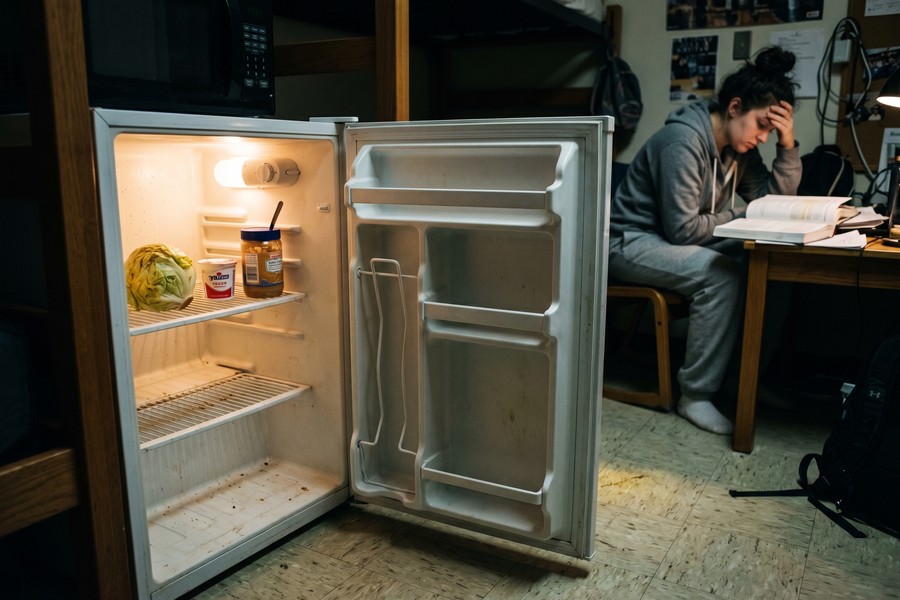
Every college student needs an emergency fund — even a small one — because financial surprises do not wait for convenient timing. A laptop breaks, a medical copay appears, a car needs a tire: without a buffer, each of these becomes a debt event. Start with a goal of $500, then build toward one month of expenses.
How to Do This
Open a separate savings account from your checking account — the psychological separation matters. High-yield savings accounts from banks like Marcus by Goldman Sachs or Ally Bank currently offer annual percentage yields above 4.5% APY in mid-2025, meaning your emergency fund actually grows while it sits there.
Automate a small weekly or bi-weekly transfer — even $10–$25 per week adds up to $260–$650 over a semester. The pay-yourself-first principle means this transfer happens before you decide how to spend the rest of your income. The Federal Reserve’s household financial survey found that households with even a $400 buffer were dramatically less likely to carry high-interest debt after an unexpected expense.
What to Watch Out For
Do not use your emergency fund for predictable expenses like car registration, holiday gifts, or textbooks. Those are known costs that belong in your monthly budget under a separate “sinking fund” category. Your emergency fund is strictly for true surprises.
Many universities have emergency assistance funds that students rarely use. These grants — often ranging from $200 to $1,000 — are available through the financial aid office and do not need to be repaid. Check your school’s student affairs website before taking out a personal loan or maxing a credit card for an emergency.
Step 6: How Do I Avoid Credit Card Debt and Overdraft Fees as a Student?
Avoiding credit card debt and overdraft fees as a college student requires two specific habits: spending below your credit limit every month and turning off overdraft “protection” on your checking account. These two steps alone can save hundreds of dollars per year in fees and interest.
How to Do This
If you use a credit card, treat it like a debit card — only charge what you already have in your checking account. Pay the full balance every month to avoid interest charges. The average credit card interest rate reached 21.47% APR in early 2025, according to Federal Reserve consumer credit data. Carrying a $500 balance at that rate costs over $107 per year in interest alone.
Student credit cards from issuers like Discover (Discover it Student Cash Back) and Capital One (Capital One SavorOne Student) offer credit-building opportunities with relatively low credit limits, which reduces the risk of overextension. Use them for one recurring expense — a streaming subscription or gas — and pay them automatically each month.
For overdrafts: call your bank and opt out of overdraft coverage. Without it, a transaction that exceeds your balance will be declined at the register instead of triggering a $35 overdraft fee. A declined card is embarrassing for 30 seconds; a string of overdraft fees can cost $100+ in a single week.
What to Watch Out For
Do not open multiple credit cards in your first year of college. Each application creates a hard inquiry on your credit report, which temporarily lowers your FICO score. One starter card used responsibly is more valuable to your credit history than three cards used carelessly. For students who want to understand how small financial habits compound over time, reading about the real cost of lifestyle creep can be a useful perspective check before spending habits solidify in these formative years.
“College is where most people’s financial habits are formed for life. The students who avoid their first credit card crisis are not the ones who avoid credit entirely — they are the ones who treat a credit card as a tool with a known cost, not free money with a delayed consequence.”
Set a real-time spending alert for every transaction on your debit and credit accounts. Most banks allow you to receive a push notification for every purchase over $0. This creates instant awareness of your spending and makes it nearly impossible to lose track of your balance — the root cause of most student overdrafts.

Frequently Asked Questions
How much should a college student spend per month on food?
A realistic food budget for a college student is $200–$400 per month, depending on whether you live on campus with a meal plan or cook independently. Students with a university meal plan typically spend an additional $50–$100 per month on off-campus dining. Cooking at home four to five days per week is the single fastest way to cut this category significantly.
What is the best free budgeting app for college students in 2025?
YNAB offers the most comprehensive budgeting system and is free for college students with a valid .edu email address for 12 months. Mint (now folded into Credit Karma) and NerdWallet’s budgeting tool are also free with no student verification required. If you prefer offline tools, a free Google Sheets template works just as well for basic income and expense tracking.
Should I get a credit card in college or just use a debit card?
Getting a student credit card in college is the right move if you can commit to paying the full balance every month — it builds your credit history, which affects future loan rates and apartment applications. If you have a history of impulse spending, use a debit card exclusively until you have three months of consistent budgeting under your belt. Either way, avoid carrying a balance: at 21%+ APR, interest charges compound quickly on a student income.
How do I budget when my income changes every month because I work part-time?
Budget from your lowest expected monthly income, not your average or best month. In months when you earn more, deposit the surplus directly into your emergency fund or savings before spending it. For students with highly variable hours, apps designed for irregular income — like the tools reviewed in this guide to budgeting apps for freelancers with irregular income — apply directly to part-time campus workers and gig-economy students.
How do I budget for textbooks and one-time college expenses?
Create a sinking fund — a separate savings bucket — for predictable irregular expenses like textbooks, lab fees, and technology. Estimate your semester costs, divide by the number of months before the expense, and set aside that amount monthly. A typical college student spends $1,200 per year on course materials, according to Education Data Initiative, which works out to just $100 per month if planned in advance.
What if I go over my budget in a category — do I just give up for the month?
No — overspending in one category is a signal to adjust, not a reason to abandon the budget entirely. When you overspend on food, for example, reduce your entertainment or clothing budget by the same amount for the rest of the month. This “robbing Peter to pay Paul” adjustment keeps your total spending on track without requiring perfection. The common mistake of giving up entirely after one overage is addressed in depth in this guide to budgeting mistakes that keep people stuck.
How do I split expenses fairly with a roommate?
Use a shared expense app like Splitwise or Honeydue to track who paid for what and balance debts automatically. Agree on shared categories — rent, utilities, shared groceries — and individual categories — personal food, subscriptions, clothing — before moving in. Set a monthly “settlement date” where one roommate Venmos the other to zero out any imbalances, which prevents resentment and awkward money conversations from building up.
How do I start saving for the future when I am barely covering my expenses now?
Start with 1% of your income — even $10–$15 per month — directed into a high-yield savings account before you spend anything else. This builds the habit of saving even when it feels symbolic. As your income grows or expenses drop, increase the percentage. If your employer offers a Roth IRA option through a side job, contributions of even $50 per month in your early twenties benefit from decades of compound growth that far outweigh the immediate sacrifice.
Is the 50/30/20 rule realistic for college students with high rent?
The 50/30/20 rule is a starting framework, not a rigid law. In high-cost cities like New York, Boston, or San Francisco, rent alone can consume 40–50% of a student’s income, making a strict 50% needs allocation unrealistic. In those cases, adjust to 65/20/15 or 70/15/15 and focus on keeping the wants category lean until your income increases. The key is maintaining some savings percentage, however small.
Sources
- Sallie Mae — How America Pays for College 2023
- TIAA Institute — Financial Wellness Among College Students
- Education Data Initiative — Average Cost of College
- Consumer Financial Protection Bureau — CFPB Finds Large Banks Charge $35 Overdraft Fees
- Federal Reserve — Report on the Economic Well-Being of U.S. Households
- Federal Reserve — Consumer Credit Outstanding (G.19 Statistical Release)
- Bureau of Labor Statistics — Consumer Expenditures Annual News Release
- Education Data Initiative — College Textbook Statistics
- NerdWallet — Best Budget Apps
- C+R Research via Western Union — Subscription Spending Statistics